
How to Compare Products: 7 Smart Buying Tips
If you’re still unsure where to start, our guide on how to choose the right product for you can help you identify your needs before comparing different options.
Comparing products before you buy can help you understand the differences in quality, features, value, and overall performance. Here’s what to look for when evaluating your options.
Comparing products before you buy can save you from choosing an option that looks great at first but doesn’t actually meet your needs. With so many brands, features, prices, and reviews available, knowing what to compare makes the decision much easier.
The goal isn’t to find the product with the longest list of features or the highest price. It’s to understand how different options compare and determine which one offers the best overall value for you.
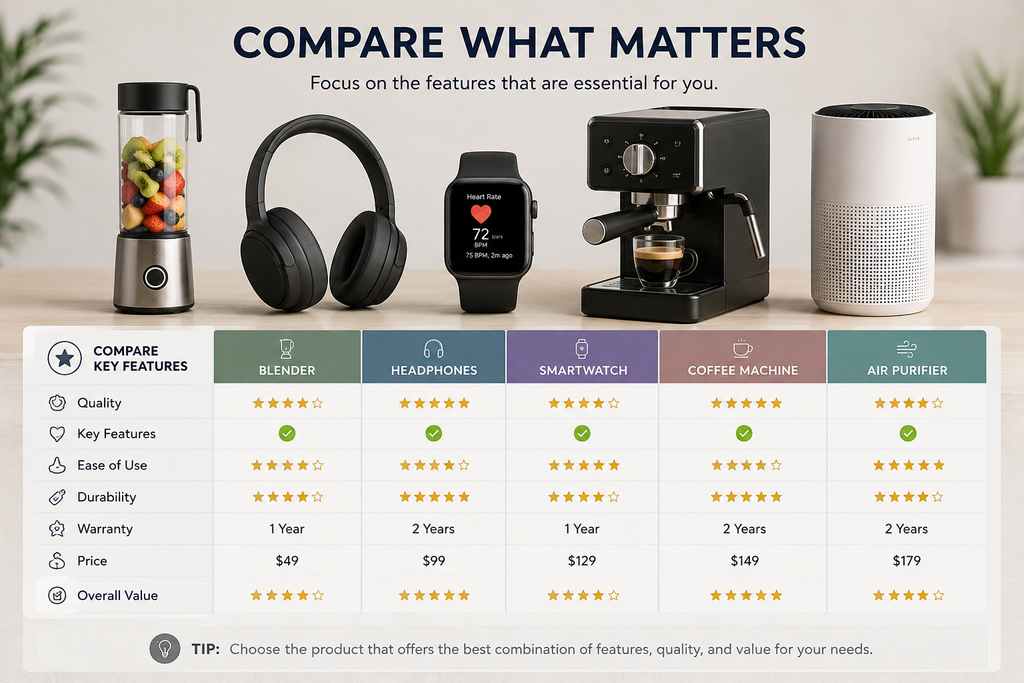
Start With the Features That Matter
Before comparing products, identify the features that are most important for your needs.
Some features may be essential, while others are simply nice to have. Separating the two helps you avoid paying more for things you may never use.
Ask yourself:
- Which features do I actually need?
- Which features would simply be nice to have?
- Are there features I don’t need at all?
- Will I use the product frequently or occasionally?
Once you know what matters, comparing different products becomes much easier.
Look Beyond the Price
Price is important, but it shouldn’t be the only factor.
A cheaper product may seem like the better deal, but if it doesn’t perform well or doesn’t last as long, you could end up spending more in the long run.
When comparing prices, consider:
- Product quality
- Materials and construction
- Features
- Expected durability
- Warranty or support
- Overall value
The best deal isn’t always the product with the lowest price. It’s the product that gives you the right combination of quality, usefulness, and value.
Compare Quality and Materials
Two products can look similar while being very different in quality.
Pay attention to the materials used, construction, finish, and overall design. When available, look for information from the manufacturer about how the product is made and what materials are used.
Quality can have a major impact on how a product performs and how long it remains useful.
Read Reviews With Context
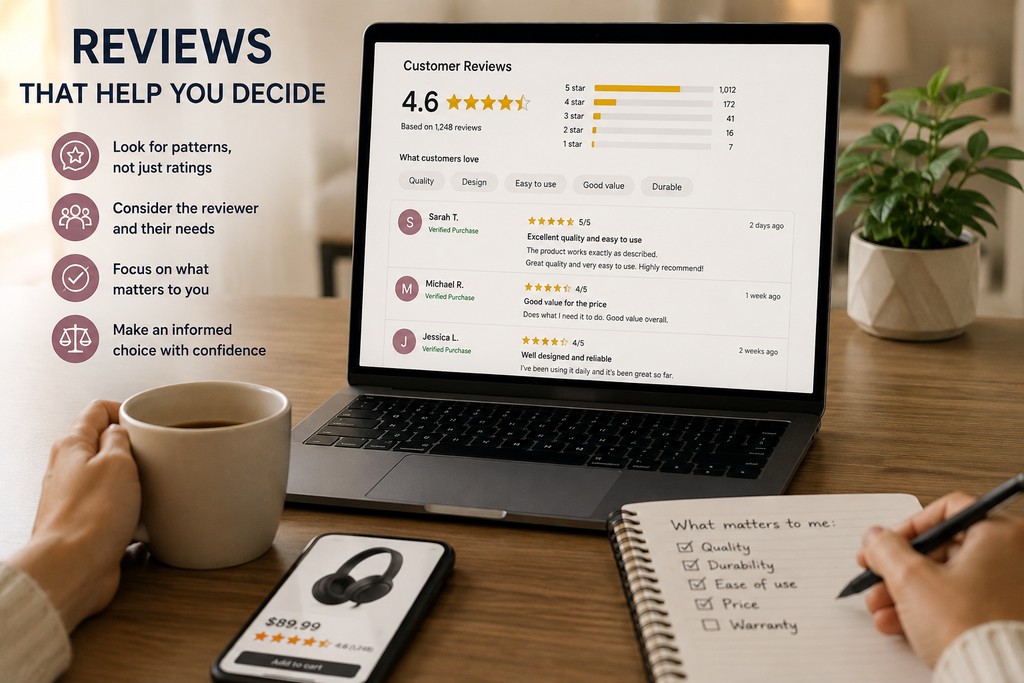
Reviews can be extremely helpful, but don’t rely on a single rating.
Look for patterns across multiple reviews. Pay attention to what customers consistently like or dislike about the product.
It’s also important to consider who wrote the review and whether their needs are similar to yours.
A product that receives excellent reviews may still not be the right choice for everyone.
Compare the Overall Value
After looking at features, price, quality, and reviews, step back and consider the complete picture.
Ask:
Which product gives me the most value for what I actually need?
This approach helps you make a more informed decision instead of simply choosing the product with the highest rating or the lowest price.
Make Your Decision With Confidence
Comparing products doesn’t have to be complicated.
Start by identifying what you need, then compare the features, quality, price, reviews, and overall value of each option.
The right choice is the one that fits your needs best — not necessarily the one that is the most expensive, most popular, or highest rated.
A thoughtful comparison can help you buy with greater confidence and avoid unnecessary spending
Choose what fits you best.
At ONDAIVO, we believe better buying decisions start with better information. That’s why we research, compare, and evaluate products to help you find options that are worth your time and money.